Archbishop Golka Makes First Catholic Charities Appearance

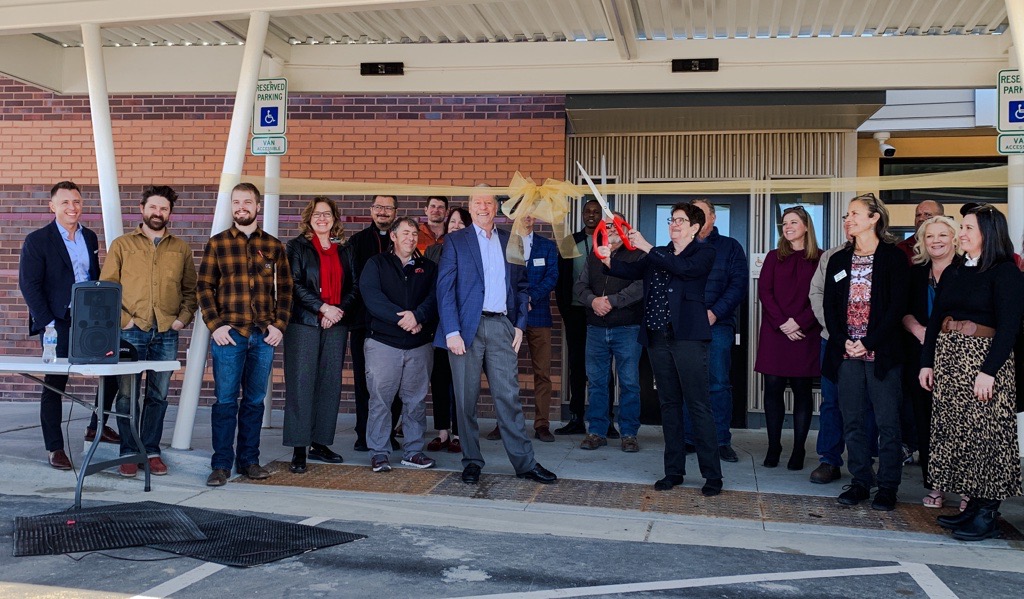
The SonRise Men’s Breakfast—an annual gathering uniting men in faith, fellowship and purpose in support of Marisol Services—carried particular significance this year with the presence of Archbishop Samuel J. Aquila Golka. The event marked his first appearance at a Catholic Charities gathering since his installation.

Hosted in support of Catholic Charities Marisol Services, the breakfast underscores the vital role men play in strengthening families and supporting women in our community. Marisol Services provides comprehensive, life-affirming care to women and families across Colorado, including pregnancy and parenting resources, material assistance, counseling and ongoing support that empowers mothers to choose life and flourish.

In his remarks, Archbishop Golka reflected on the responsibility of men to stand alongside and support the women in their lives.

“The women in our lives deserve to have us stand up and support them,” he said, a message that resonated deeply throughout the room. He connected this call to action to his own upbringing, recalling how his mother, a dedicated pro-life advocate in Grand Island, Nebraska, traveled from parish to parish speaking about the dignity of life and encouraging others to become involved. Her witness, he noted, helped shape his own commitment to this mission.

He also affirmed the work of Marisol Services, highlighting the importance of walking with women and families in need. “What Marisol is doing in our Colorado community is vital” he said, underscoring the impact of compassionate, life-affirming care in our community.

The morning concluded with a blessing from Archbishop Golka, grounding the gathering in prayer and reminding those present of their shared call to serve, protect and uplift. His visit not only honored the work of Catholic Charities and Marisol Services, but also invited each man in attendance to more fully live out that mission in his daily life.

Finding His Way Home Again

After a lifetime of hard work and providing for his family, Joe found himself in a season of life he hadn’t expected. As he grew older, he moved in with family for support. While they cared about him and were trying to help, the living situation gradually became difficult. Over time, he had less control over his daily life and finances than he was used to, and for someone who had spent decades working and making his own way, that loss of independence weighed heavily. He didn’t want conflict or to cause trouble—he simply wanted a chance to breathe again, to make his own decisions and to regain a sense of self.

Quietly, he held onto one dream: to return home. Not just to a place, but to a feeling of familiarity and belonging—to the people and community who knew him before life became so heavy. He understood that getting there would take time. First, he needed stability. He needed independence. He needed a path forward.

That’s when he connected with Catholic Charities’ Samaritan House Greeley and enrolled in case management services. Within a short time, things began to shift. Paired with a dedicated case manager, Joe no longer had to navigate everything alone. For the first time in a long time, someone was truly listening—not just to what he needed, but to what he hoped for. Together, they worked step by step, completing housing applications, gathering paperwork and navigating each requirement along the way. On the hard days, his case manager offered encouragement and steady support, and during the waiting periods, they stayed connected—helping him remain hopeful and focused on his goal.

Then came the call that changed everything: Joe had been approved for an apartment. It wasn’t just housing—it was freedom. For the first time in years, he had a place of his own, a space where he could close the door and feel at peace and begin again. With continued support from his Samaritan House Greeley case manager, he settled into his new home and began rebuilding his independence in practical, meaningful ways. He regained control of his finances, relearned how to budget, and slowly began to save, each dollar representing not just progress, but possibility.

The journey wasn’t without challenges. There were moments of doubt and days when the distance between where he was and where he wanted to be felt overwhelming. But with consistent support, stability and a renewed sense of purpose, Joe kept moving forward. Over the course of the next year, his determination and resilience carried him through, and little by little, he drew closer to the goal he had been holding onto all along.

Eventually, the day came when he had saved enough to make the journey home. With a heart full of gratitude and a suitcase filled with hard-earned independence, Joe returned—this time not out of necessity, but by choice. Today, he is surrounded by people who love and uplift him, a community that reminds him of who he is. Through the support of Catholic Charities and the dedicated team at Samaritan House Greeley, he didn’t just find his way back home—he found himself again.

Finding Purpose on the Mobile Clinic

Jennifer Brady began volunteering with the Marisol Mobile Health Clinic as a way to put her Catholic faith into action through service. What she expected to be a simple role driving the mobile unit on Thursdays quickly became a more meaningful, hands-on experience.

Marisol Health, a ministry of Catholic Charities, provides life-affirming, comprehensive care to women and families. In response to growing needs across Northern Colorado—especially among women facing barriers like transportation, cost or uncertainty about where to turn—the Marisol Mobile Health Clinic was created to bring care directly into the community.

The mobile clinic allows Marisol to meet women where they are, offering free services like pregnancy testing, limited ultrasounds and STI testing, along with patient navigation. By going into neighborhoods like East Colfax, the mobile unit helps ensure that women who might not otherwise seek care have access to trusted, compassionate support at critical moments.

Each Thursday, Jennifer serves at the East Colfax and Ironton location, helping prepare the clinic, welcome patients and share information with nearby businesses so more people know services are available.

“I originally thought I’d just be driving,” she says. “But I’ve learned a lot about what it takes to run the clinic and support the women who come through.”

She credits much of that learning to the team she serves alongside.

“Susana and Teresa have been great to learn from. They really know the work and they’ve been welcoming and generous with their time. They’ve made it easy to feel like part of the team.”

For Jennifer, the most important part of volunteering is the consistency—showing up week after week in a place where women may be facing uncertainty.

“I look forward to Thursdays,” she says. “There’s always a chance to help someone who might feel alone.”

Through her time with Marisol Mobile, Jennifer has found a practical way to serve her community while supporting Catholic Charities’ mission to uphold the dignity of every person and walk alongside those in need with compassion and care.

A World of Stories: Marc Lenzini’s Volunteer Journey

Marc Lenzini's Volunteer Journey

After nearly three decades in the classroom, Marc Lenzini wasn’t ready to stop teaching—or connecting with people. Instead, he found a new classroom in the heart of Catholic Charities, serving families at Marisol Family and the Little Flower Assistance Center.

Marisol Family provides life-affirming support to mothers, fathers and young children through services like pregnancy support, parenting resources and essential items such as diapers and baby supplies. The Little Flower Assistance Center, one of Colorado’s busiest food pantries, serves individuals and families facing food insecurity by providing groceries and basic necessities to those in urgent need.

Marc began volunteering with Marisol Family about three to four years ago, first at the St. James location and now at Queen of Peace on Saturdays. About a year ago, he also joined the Little Flower Assistance Center, where Wednesday afternoons quickly became a favorite part of his week.

“It’s a fantastic group of people,” Marc says. “There’s such a strong sense of community among the volunteers.”

Before retiring, Marc spent nearly 30 years teaching at Bishop Machebeuf High School, primarily theology. His connection to Marisol Family began through former students and colleagues already involved in the ministry. What started as occasional service days with his students eventually became a personal calling.

In a full-circle moment, when Marc arrived for his first day volunteering at Marisol Family, his “first boss” was Elizabeth Vergil—now director of Marisol Family. Elizabeth had once been his student.
“I knew the work they were doing. And when I retired, I just wanted to be part of it however I could.”

Marc’s commitment to service extends far beyond his time at Catholic Charities. In 2010, he was honored by Pope Benedict XVI with the Cross Pro Ecclesia et Pontifice—one of the highest awards a Catholic can receive. The award, which translates to “For the Church and the Pontiff,” recognizes sustained and exemplary service to the Church. For those who know Marc, the honor comes as no surprise. Even in retirement, his dedication to serving others continues to define his life.

That same spirit of curiosity and connection led Marc to begin noticing something remarkable while serving at the Little Flower Assistance Center. As part of the intake, clients are asked to share their country of origin, and week after week, he was struck by the diversity.
“I was amazed at how many countries I had come across in just a few months.”
Curious, he started keeping a list. He began asking clients at Marisol Family as well—many of whom he had come to know over the years, some even following services from St. James to Queen of Peace.

The number kept growing.

Today, Marc has documented 31 countries—and counting.
From Afghanistan and Mexico to Côte d’Ivoire and even Tajikistan, each name on the list represents a story, a journey and often unimaginable resilience. “I was just flabbergasted. How in the world did they get here? What did they go through?”

Despite language barriers, Marc has found that connection doesn’t always require words. At Queen of Peace, he greets a woman from Côte d’Ivoire in French using one of the few phrases he knows. She responds in full conversation, both of them aware of the gap yet sharing a moment that brings joy to them both.

“It’s like our little secret,” he said.
Then there’s Margarita Castro, an 83-year-old grandmother caring for six grandchildren. Years ago, Marc accidentally addressed her as señorita instead of señora. She’s never let him forget it and they both laugh about it every time she returns.

“These are the kinds of people you meet. Just wonderful people.”

The Catholic Social Teaching principle Solidarity teaches that we are one human family. By standing with our neighbors in times of struggle, we recognize our shared responsibility to support one another and work toward a more compassionate world.
Marc notes a difference between the two ministries. At Marisol Family, he often sees the same families regularly, allowing deeper relationships to form as parents return for ongoing support. At the Little Flower Assistance Center, the need is often more urgent—and the pace is quicker as volunteers serve large numbers of people facing food insecurity.

“Some of these people are in real danger. They don’t have enough food. They don’t have jobs. Some are afraid of being deported.”

Even in brief interactions, the weight of their experiences is clear. One man he met held a PhD and had published books in his home country—yet struggles to use his credentials in the U.S. Others have fled conflict, persecution or instability, rebuilding their lives from scratch.

“I’m just in awe of their courage. Their love for their families. What they’ve gone through just to stand in front of you… it’s incredible.”
Whether it’s learning new words in Spanish, sharing a smile across languages or recognizing a familiar face from years past, Marc has become a steady presence in the lives of many he serves. And in return, they’ve opened his eyes to the vast, interconnected world that exists right here in our community.

“What a gift it’s been to me. To be around these people… I just can’t get enough of it.” Thirty-one countries. Countless stories. One volunteer who continues to show up—week after week—with curiosity, compassion and a deep appreciation for the people he meets.


From Womb to Tomb

From Womb to Tomb

“We’re talking about things that can be challenging. But once people start asking questions, you can see how much they want this information.”

Through a growing partnership between Catholic Charities and Catholic Funeral & Cemetery Services (CFCS), Deacon AJ Misiti, Director of Parish Outreach at Catholic Charities, and Erin Scherer, Outreach Coordinator at CFCS, are visiting Catholic Charities Housing communities for seniors as well as the Mulroy Senior Center, which provides community, support and services that help prevent isolation.

At each location, they guide residents through important end-of-life planning conversations, offering both practical information and spiritual insight.

During these visits, residents ask direct and often urgent questions:
• “What happens if I can’t afford a funeral?”
• “Can I be cremated?”
• “Who makes decisions if I don’t have family nearby?”
• “What should I have in place now?”
• “What is the Catholic teaching behind keeping ashes together?”

Each session helps residents better understand their options while reinforcing a deeper truth: every life has value, and every person deserves to be treated with dignity—both in life and after death.

Erin walks through the essentials—how funeral homes, cemeteries and churches each play a role, what pre-planning involves and what steps can ease the burden on loved ones later.

“A lot of people assume someone else will figure it out,” Erin said. “But having a plan in place really helps reduce stress for everyone.”

For many seniors, especially those living alone or on fixed incomes, financial concerns are significant. CFCS shares information about available resources to ensure no one is overlooked or forgotten, including burial assistance through counties and ministry programs like the Crypt of All Souls, which provides a free option for the interment of cremated remains.

One of the most practical tools shared during these presentations is the Colorado Declaration of Disposition form. This simple legal document allows individuals to clearly state their wishes for their final arrangements and designate a trusted person to carry them out—helping ensure those wishes are known and respected.

For Holy Family Plaza resident Mary Anne, the presentation brought both clarity and reassurance.

“This was helpful to understand what is available and how to use the Declaration of Disposition form,” she said. “I have everything planned, but it’s assuring to know that this form will help my family honor my wishes.”

These presentations reflect a broader pro-life mission—honoring the dignity of the human person at every stage, including the end of life.

Deacon AJ also helps answer questions about Catholic teaching, including care for the body and the importance of treating it with reverence.

“It is a beautiful gift from God when we are able to bring his peace to others. We have residents who have very, very little and, sadly, no family to make arrangements for them when they die. They were so relieved to find out that there was a way there remains would be treated with dignity and respect when they die,” said Deacon AJ.

A central principle of Catholic Social Teaching, Life and Dignity of the Human Person reminds us that every individual is created in God’s image. No matter someone’s circumstances, each life carries inherent dignity and deserves compassion, respect and care.

Residents leave with more than just information. Many take practical steps, like completing a Colorado Declaration of Disposition form, and just as importantly, they leave with a renewed sense of peace—knowing their life and their final wishes matter.

“You can tell people feel relieved,” Erin said. “They just needed someone to walk them through it in a way that doesn’t feel scary.”

Through this partnership, Catholic Charities continues to meet seniors where they are—offering clear guidance, compassionate support and a consistent message: every life has value, and every person deserves to be remembered with dignity.

Helping Families Travel Safely

“I thought I had installed my child’s car seat correctly for months, but I learned so much. I’m grateful to know my child is truly safe every time we drive.”

For this parent, peace of mind didn’t come from guessing—it came from being supported, guided and given the tools to protect their child with confidence.

Across the country, that confidence is not always guaranteed. Nearly 60% of car seats are installed incorrectly, putting children at greater risk in the event of a crash. For many families, it’s not a lack of care—it’s a lack of clear information, hands-on support and access to the right equipment.

That’s where Catholic Charities steps in.

Families recently gathered for a hands-on Early Childhood Education (ECE) event focused on child passenger safety. Led by Jody Davison from the Denver Department of Transportation and Infrastructure (DOTI), the session created a space where parents could ask questions, learn together and gain clarity on something that can feel overwhelming.

At Catholic Charities, our Early Childhood Education program does more than prepare children for kindergarten—it supports the whole family. Through safe, nurturing learning environments, parent education and connections to essential resources, ECE helps families build a strong foundation.

That support was on full display during this event.

Parents learned how to choose the right car seat for their child, understand safety laws, check expiration dates and properly install each seat. What may seem like small details can make a life-saving difference.

Just as important, families didn’t leave empty-handed.

Each family had the opportunity to receive a free car seat or booster tailored to their child’s needs—removing a financial barrier and ensuring their learning could be put into practice right away.

The following week, families returned to Catholic Charities’ Kentucky Early Childhood Education Center—one of our ECE sites dedicated to supporting young children and strengthening families in our community.

During one-on-one appointments, Jody and her team worked alongside parents to install 20 car seats and booster seats directly into their vehicles. Parents practiced, asked questions and built confidence with each step. Several expired car seats were also identified and safely recycled, giving families an added layer of protection.

Moments like these reflect the heart of Catholic Charities’ mission: walking alongside families, meeting practical needs and creating opportunities for lasting stability and safety.

This effort was made possible through collaboration with valued partners, including Mary McNeill from Denver Great Kids Head Start and the Denver Housing Authority (Westwood), who provided classroom space. It was also supported by our dedicated ECE team members—Teresita, Erika, Rachel, Rosa and Rubi—whose care and commitment made each family feel seen, supported and empowered.

Because every child deserves a safe ride—and every parent deserves the confidence to provide it.

The Catholic Social Teaching principle Call to Family, Community and Participation reminds us that people are meant to live in relationship with others. Strong families and supportive communities help individuals rediscover belonging and participate in building a hopeful future.

Spring Break With a Mission: FOCUS Missionaries Serve Across Denver

For many college students, spring break means relaxing travel or rest. But this year, a group of missionaries from FOCUS Missionaries in Northern Michigan chose something different — spending their break in service with Catholic Charities of Denver.

The group of 13 missionaries traveled to Colorado to dedicate a week to prayer, community and serving neighbors across several ministries.

Throughout the week, they stepped into many corners of the organization’s work. At Samaritan House, the missionaries helped organize the warehouse, sorting and preparing supplies that support the thousands of individuals and families who come through the doors each year. What might seem like simple tasks—stacking, sorting and moving items—play a critical role in making sure shelters run smoothly and guests receive the essentials they need.

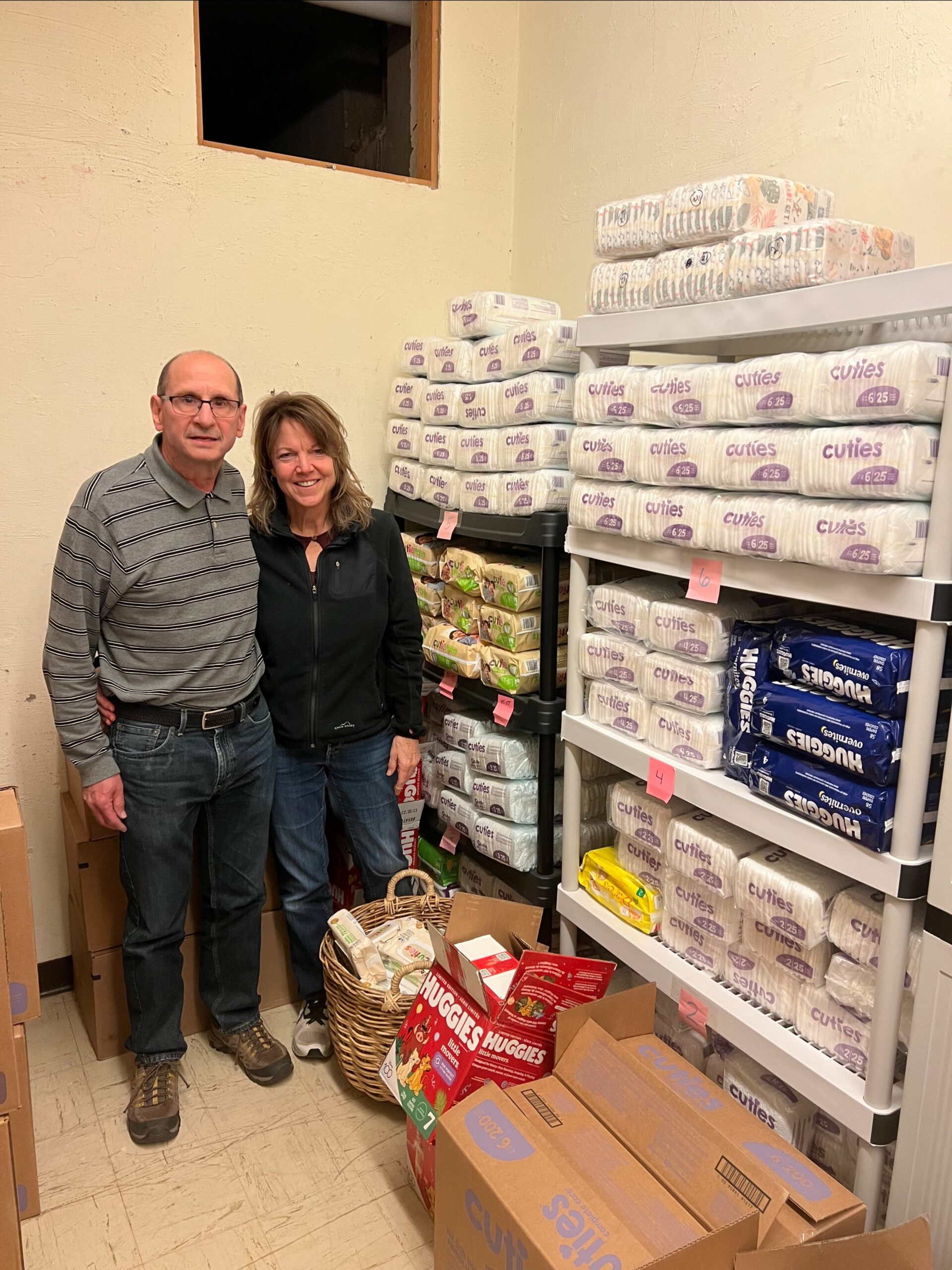
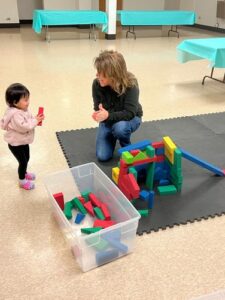
At Marisol Family’s St. Pius location, the group assisted with diaper distribution, helping parents access basic necessities that can make a big difference for young families navigating difficult circumstances. The missionaries shared that they encountered many children while volunteering there, which made the diaper distribution especially memorable. Interacting with the kids added a sense of joy to the day and made the experience of helping families pick up diapers even more meaningful.

They also spent time at Marisol Health assembling layettes—bundles filled with baby essentials for new and expecting mothers. At the end of their volunteer work, they spent time praying in the Marisol Health prayer garden.

Their last visit was to Marian Plaza, a Catholic Charities Housing community for residents age 55 and older. There, they helped clean up community van as well as the grounds and spent time with residents, offering technology assistance—showing them how to better use their phones, computers and other devices to stay connected with family and the world around them. The visit ended on a joyful note as the group sang together, filling the building with music and laughter.

“I know they have to leave to go back home, but we never wanted them to. It was so nice to have them around,” shared Marian Plaza resident, Pat Barnes.

While the missionaries came to serve, they also found themselves deeply impacted by the people they encountered.

Angela, one of the missionaries, reflected on the experience:

“As I speak for my group—13 of us total—I can say that all of us experienced only good from the Catholic Charities staff while in Denver,” she said.

The trip was structured around service and reflection. The missionaries committed to a phone fast during the week and spent time each day in prayer, while sharing meals together in the evenings.

“Spending an entire week on a phone fast, extended daily prayer, sharing evening meals and having all our focus on the poor—you know it’s going to be a good week,” Angela said.

For many in the group, some of the most meaningful moments came from learning about the different ministries and meeting the people behind them.

“Some of the best days were the days we got to know the individual missions at various Catholic Charities locations, like being in the warehouse with Miss D and learning about Marisol Clinic,” Angela said. “This week was a blessing for me personally and for the students that came with.”

By the end of the week, the missionaries had contributed to several ministries while gaining a deeper understanding of the work happening across Catholic Charities—work they were able to support, even if only for a few days of their spring break.

The Catholic Social Teaching principle Solidarity teaches that we are one human family. By standing with our neighbors in times of struggle, we recognize our shared responsibility to support one another and work toward a more compassionate world.

Seeds of Life During 40 Days for Life

At the beginning of the Spring 40 Days for Life campaign in Denver, which lines up with our Lenten season, a group of volunteers gathered quietly in prayer outside a local abortion facility, bringing their fasting and prayer with them.

They spoke often about hunger — not just the hunger we feel in our stomachs, but the deeper hunger of the heart. The hunger for justice. The hunger for mercy. The hunger to see life protected and families supported in moments of uncertainty. That hunger appeared almost immediately.

The day after the prayer campaign began on February 19, 2026, a young woman reached out through email to our 40 Days for Life after a friend encouraged her to contact the 40 Days for Life volunteers.

Her message was simple:

“Hi there, I was sent your email by a friend. They had seen my post about me being young and pregnant. I just found out the 17th. He said you would be open to helping me.”

It was the beginning of a journey. The young mother shared that she felt torn about what to do. She described herself as “50/50” about whether she should carry the baby to term. Both she and the father of the child were experiencing pressure from friends to have an abortion. But she stayed in contact.

Soon she attended her first prenatal appointment at a pregnancy resource center. Though the pregnancy was still very early, she shared a message filled with excitement:

“We heard the baby’s heartbeat.”

That moment changed everything. The couple decided to choose life. They asked the volunteers to continue praying for them and walking alongside them as they prepared to welcome their child.

Just days later, another encounter unfolded on the sidewalk outside the clinic.

A prayer volunteer noticed a young couple lingering before entering the building that provides abortions. She was about 11 weeks pregnant and had already visited the abortion clinic once before. Instead of walking straight inside, they stopped and spoke with a 40 Days for Life volunteer. The conversation was long and gentle. The volunteer listened to their fears and offered another option — a chance to visit a nearby pregnancy resource center where they could receive counseling and support.

After some time, the couple agreed to go to Marisol Health together. Later that day, they returned past the sidewalk where the volunteer was still praying. As they drove by, they waved and smiled through the car window. They had scheduled a follow-up appointment and were continuing to explore life for their baby.

Moments like that are rare, volunteers say — especially seeing both mother and father supporting each other.

But not every day brings visible victories.

Late afternoons outside the clinic often feel heavy. One volunteer described the quiet that settles in as the sun begins to set. Cars come and go. Some carry women who appear determined to go inside. One afternoon, a hotel vehicle pulled into the lot with a woman sitting alone in the back seat. When the volunteer offered help and alternatives, she waved them away through the open window. She appeared to have traveled from out of state.

The moment lingered with a sense of grief.

For those who stand there in prayer, the weight can feel overwhelming. Yet they continue. Because sometimes hope appears in unexpected ways — in a message from a young mother looking for help, in the sound of a baby’s heartbeat for the first time, or in a couple choosing to seek support together.

The 40 Days for Life volunteers believe even the smallest acts matter: one conversation, one prayer, one moment of compassion. Seeds planted in love can change the future.

And sometimes, those seeds grow into new life.

If you are interested in getting involved in the 40 Days for Life ministry, please contact Lisa Blevins at aurora40daysforlife@gmail.com.

Ode to the Journey Home

“Every day I witness the quiet bravery it takes to begin again. In my work as the volunteer coordinator at Samaritan House Greeley, I have met individuals and families who carry heavy stories yet still choose hope, even when the path forward feels uncertain. Their resilience, their willingness to return, to try again, to trust the process one more time, has deeply shaped me. Ode to the Journey Home, which I wrote for a poetry class I’m taking as I complete my degree while working at Catholic Charities,  is inspired by their courage and by the joy that grows slowly and steadfastly as they step toward the next chapter of their lives. I hope you will enjoy it.” – Lindsey Schwartz

Ode to the Journey Home

O Joy that walks in softly,
not loud or careless,
but earned.
I sing of you as you rise
in those who choose hope
day after day.

You are not ignorance of hardship.
You are courage with tired eyes.
You are the decision to stand
when the weight of the world
presses hardest.
I must keep going,
the heart says,
or the weight will win.

O Joy, you have waited
through returning doors,
through humbling starts again,
through the ache of knowing
how close home once felt.
You stayed through setbacks,
through illness and uncertainty,
through nights when tomorrow
had no shape.

You lived in shared spaces,
in planning rooms and hallways,
in early mornings sweeping floors,
serving meals,
offering help before it was asked.
You turned consistency
into strength
and kindness into proof.

O Joy, you learned patience,
saving slowly,
waiting for the right door,
trusting the process
even when the clock felt cruel.
You did not rush what needed care.
You endured.

Now, O Joy,
you stand at a threshold,
keys warm in waiting hands,
a door that closes gently behind you,
a place to rest without fear.
Not just shelter,
but home.

Teach us this:
that progress is rarely straight,
that returning is not failure,
that dignity survives every detour.
That with support,
with perseverance,
with a hopeful heart,
new beginnings are always possible.

“Just Don’t Give Up” — How Four Words Helped Heather Rebuild Relationships

Heather fondly remembers four words that gave her the courage to keep going — “Just don’t give up.” The words ring clearer and louder in her mind today than they were spoken aloud. She never learned the name of the stranger who said them, but the message carried a thread of hope that kept her going.

Relationships mean the world to Heather, and she takes pride in showing up for others. Her work ethic, drive and desire to serve helped her move from a cashier to assistant manager at a general store. She often worked long hours and became known as someone coworkers could count on.

Unfortunately, when her closest relationships became unsafe and unstable, Heather’s living arrangements fell apart. She found herself hopping from couch to couch, searching for work and wondering how things unraveled so quickly.

Still, that glimmer of hope from the library stayed with her and eventually led her to the doors of Samaritan House Greeley on the Guadalupe Campus. A friend told her it was a safe place to go — more than just a bed. Warm meals, clean showers and laundry access were waiting for her. Most importantly, she would meet people ready to help her find her way forward.

Exhausted but determined, Heather made her way to Samaritan House Greeley, believing that even one night of safety would be better than where she was. Samaritan House Greeley has two types of shelter — emergency overnight shelter and an extended-stay case management program designed to help residents regain housing.

That first night, Heather stayed in emergency shelter with other women in similar situations. After a full meal and a safe place to sleep, she was finally able to relax. Stability slowly returned and she was soon accepted as a resident of the extended-stay program at Samaritan House Greeley.

The structure was exactly what Heather needed: 150 days of dorm-style living, weekly case management focused on goal setting and a clear path toward long-term housing. The expectations felt daunting but they gave her the push she needed.

She knew she needed to secure income in the first 30 days. Still, the days slipped by. By day 26, discouragement gnawed at her. By day 27, she was praying for a miracle.

That afternoon, her phone rang. The job was hers.

Tears of relief came quickly as she told her case manager, Cindy, the news. For the first time in months, the weight on her chest lifted.

“Once I started asking for help, it’s just been one open door after another,” she said.

With Cindy’s support, Heather began learning financial responsibility and building a foundation for a stable future. During her time in the extended stay program, she also focused on rebuilding a relationship that means everything to her — the one with her daughter, who recently graduated from high school.

After saving enough money for rent, Heather moved into a shared home through a community partnership in Greeley. Beyond having a room to rent, she has accountability and community.

Heather’s desire to lead and serve others shows in her day-to-day life now. She organizes shared spaces, takes on extra chores and encourages her housemates to stay on track.

Today, Heather is working, saving and rebuilding her life one step at a time. She counts her blessings, including her reunion with her daughter, stable housing and the supportive community around her.

Heather is one of many who discover hope and healing at Catholic Charities, where the team works daily to meet immediate needs and guide people toward lasting stability. Her story is a reminder that perseverance, paired with compassionate care, can support neighbors and transform lives.